Smoke and Carbon Monoxide (CO) Alarm Safety
Smoke and Carbon Monoxide (CO) Alarm Safety Tips
Smoke Alarms
- It is best to use interconnected smoke alarms so that when one smoke alarm sounds, they all sound.
- A closed door may slow the spread of smoke, heat, and fire.
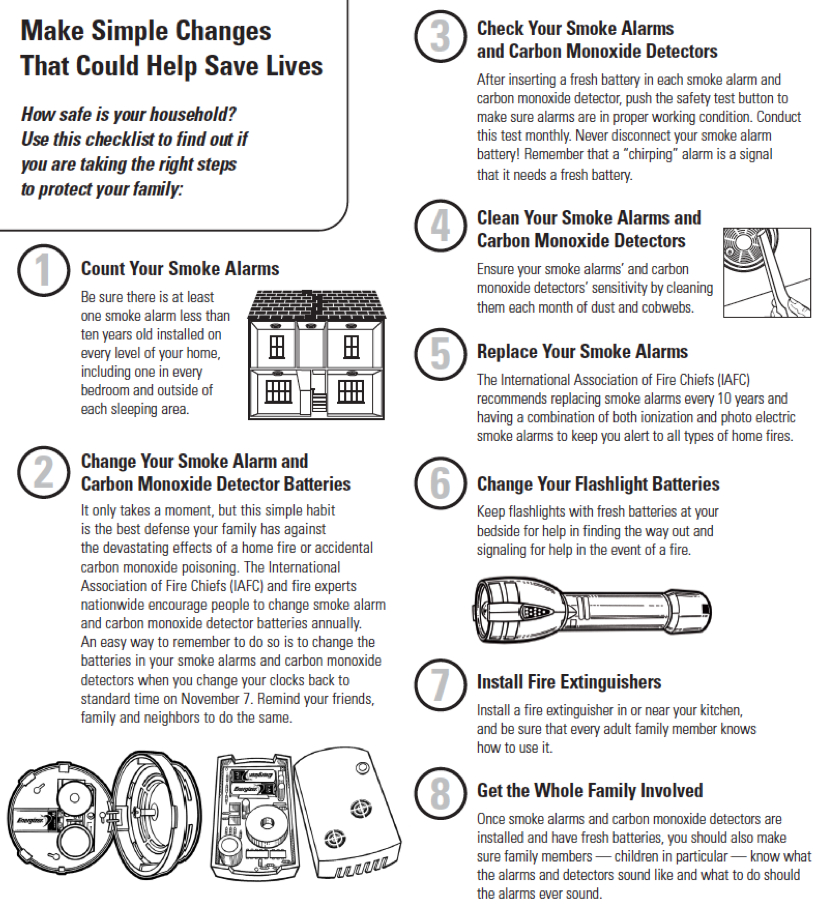
- Working smoke alarms are an important part of a home fire escape plan. Test smoke alarms at least once a month using the test button.
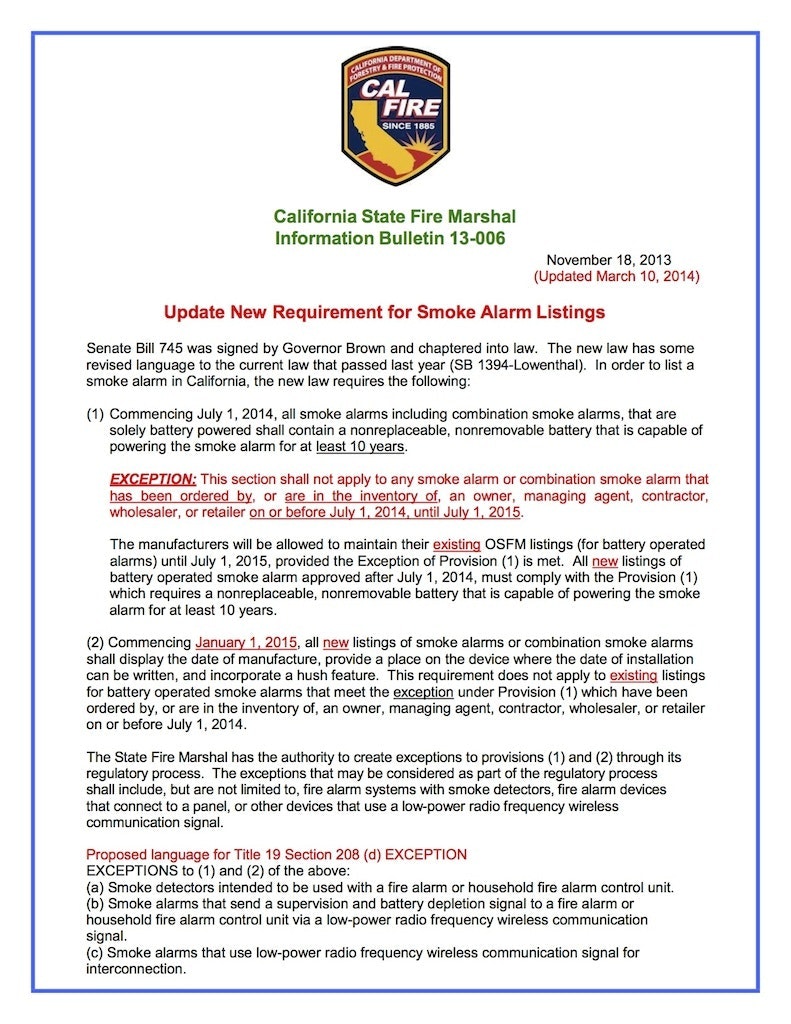
- Replace smoke alarms when they are 10 years old. Check the manufactured date to find out how old your smoke alarm is.
Carbon Monoxide (CO) Alarms
- CO alarms should be installed in a central location outside each sleeping area and on every level of the home and in other locations where required by applicable laws, codes or standards. For the best protection, interconnect all CO alarms throughout the home.
- Follow the manufacturer’s instructions for placement and mounting height.
- Test CO alarms at least once a month; replace them according to the manufacturer’s instruction.
- If the CO alarm sounds, immediately move to a fresh air location outdoors or by an open window or door. Make sure everyone inside the home is accounted for. Call for help from a fresh air location and stay there until emergency personnel.
More Information & Resources